

The DATA EQUALITY project held its Final Policy Event, “Closing the Gap on Algorithmic Discrimination”, on 23 September 2026 in Athens. The event brought together representatives from the judiciary, law enforcement, public authorities, academia and civil society to discuss how data-driven and AI-based tools can be used while protecting fundamental rights and equality.
DATA EQUALITY (Digital data to identify, prevent and counter intersectional discrimination in Phygital AI-based environments) examines how data and AI-based tools can both reveal and reproduce discrimination, while supporting professionals in identifying and addressing these risks.
A day of expert exchange
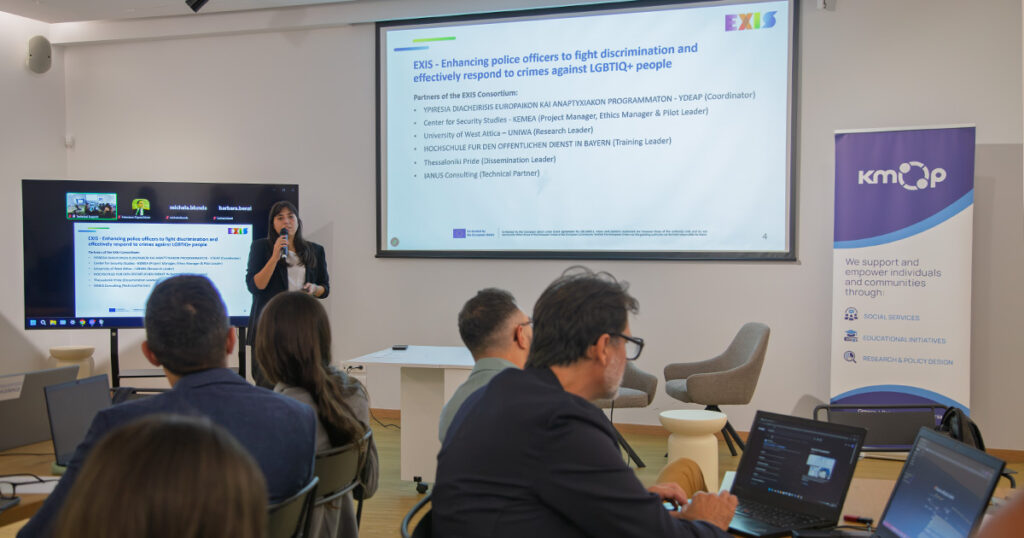
The event opened with institutional greetings from Beatrice Sperotto, representative of the Court of Appeals of Venice, followed by a session exploring data equality, fundamental rights and European challenges. Discussions covered fair trial and equality of arms in data-based proceedings, procedural risks in data acquisition and analysis, including the Europol case, and data fragmentation as a potential source of discrimination in the context of EU Framework Decisions on judicial cooperation.
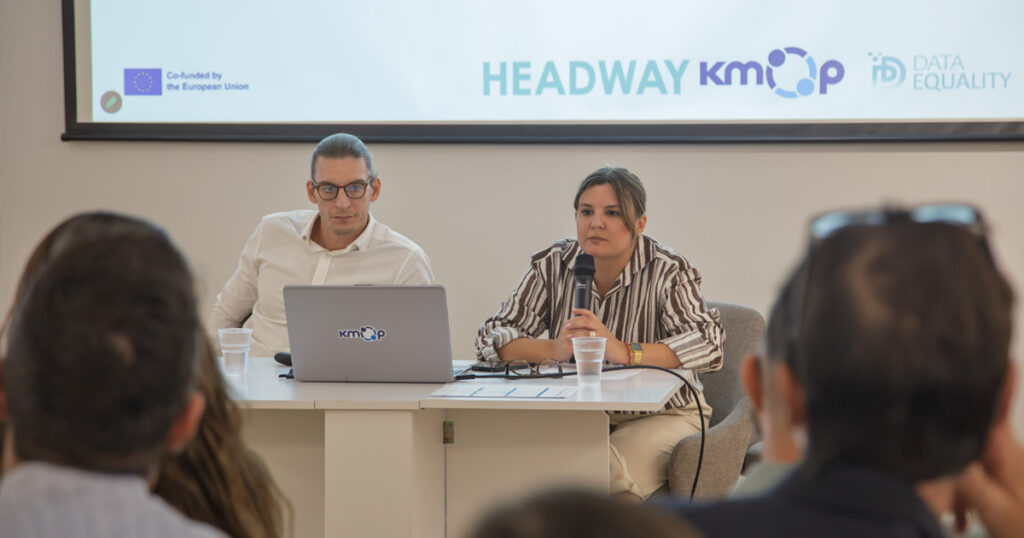
The second session presented the project’s main findings, including lessons from the cascade training activities and an Implicit Association Test (IAT) exercise led by KMOP and Headway, focusing on identifying and addressing bias.
The third session turned to practical applications, with experts discussing the legal management of AI-based tools in investigations. The session also featured the EU-funded EXIS project, Enhancing police officers to fight discrimination and effectively respond to crimes against LGBTIQ+ people, highlighting complementary approaches to tackling discrimination in law enforcement.

The final session focused on the future of judicial cooperation in the age of big data and e-evidence. Experts discussed how errors in algorithms can be identified and addressed in judicial contexts, including the role of large and small language models. The event concluded with a Q&A session and closing remarks on how the project’s findings and tools can contribute to future action on data equality and non-discrimination.
The Final Policy Event provided an opportunity to reflect on the project’s results and bring together different professional perspectives on one of the key challenges emerging from the increasing use of data and AI in justice and law enforcement.